

Celebrating Culture: Janelle Alladina Brings Powwow Dance and Storytelling to Cloverdale Catholic School
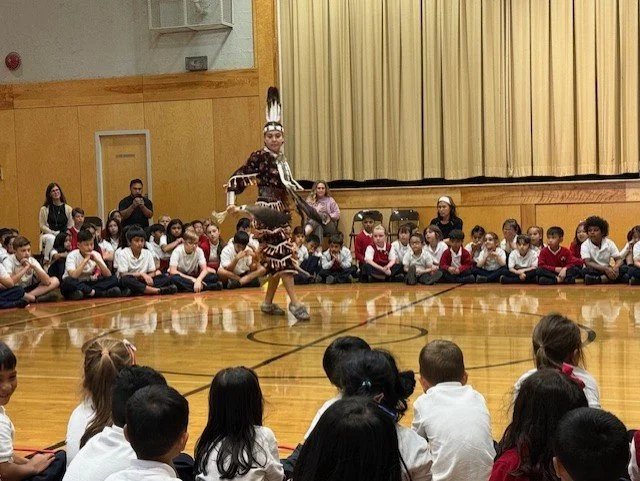
Janelle Alladina, a celebrated Indigenous performer from the Secwépemc (Shuswap) Nation, brought an unforgettable day of learning, culture, and joy to Cloverdale Catholic School. As a professional powwow dancer with deep roots in her Secwépemc heritage, Janelle has competed and triumphed at numerous powwows across Canada and the United States, earning recognition for her artistry and dedication to Indigenous dance traditions.
Honouring Tradition Through Dance and Story
Janelle’s visit began with dynamic workshops for every class, where students and staff were introduced to the rich history and meaning behind powwow dancing. Drawing from her extensive experience and personal connection to her culture, her father is former chief Willie Alphonse Jr. of T’exelc (Williams Lake Indian Band), and her mother is Cree from Horse Lake. Janelle shared fascinating details about the regalia, rhythms, and spiritual significance of each dance style. Students learned that powwow is much more than a performance; it is a living tradition, passed down through generations, that celebrates identity, resilience, and community.
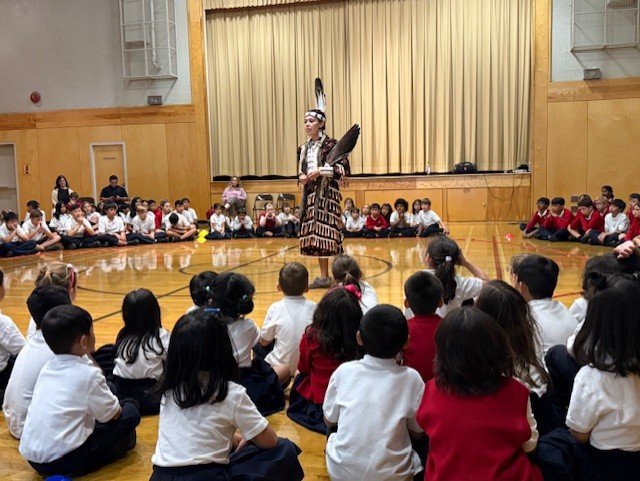
Hands-On Learning: Dance Workshops
Through engaging, hands-on instruction, Janelle guided the students in mastering basic powwow steps and rhythms. The workshops emphasized respect for the traditions and protocols of Indigenous dance, highlighting how each movement and song reflects a story or teaching from the past. Students and staff had the unique opportunity to wear portions of regalia and to participate in group dances, experiencing firsthand the energy and sense of belonging that powwow brings to Indigenous communities.
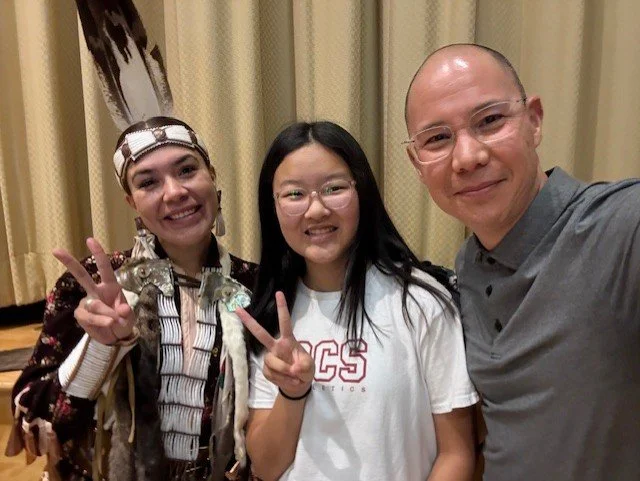
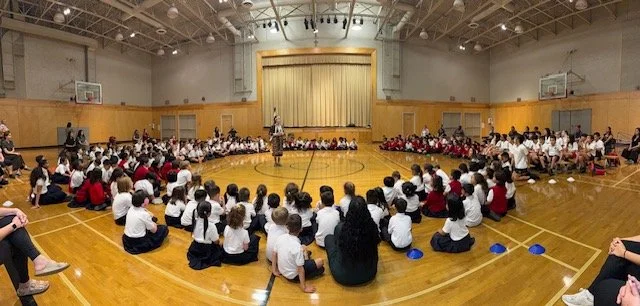
A School-Wide Celebration
The grand finale brought the entire school together for a vibrant storytelling and powwow dancing performance led by Janelle. Her mastery of the hand drum and her dynamic storytelling transported everyone in attendance, creating a powerful sense of unity and celebration. Janelle also demonstrated the importance of passing on Indigenous knowledge, sharing personal stories about traveling the powwow trail and her commitment to teaching traditional ways of life.
Lasting Impact
Janelle’s visit left a profound impression on all who participated. Staff and students alike expressed gratitude for the chance to experience Indigenous culture in such an interactive and meaningful way. The day’s events not only deepened understanding of powwow dancing, but also fostered greater respect for Indigenous histories and ongoing contributions to our shared community.
Janelle’s passion for cultural education shines through in every aspect of her work. As she herself says, “Being able to share culture and dance has always been very important to me, especially to our younger generation.” Her time at Cloverdale Catholic School was a powerful step toward reconciliation, respect, and celebration of Indigenous heritage.
The Catholic Church in Canada states that a true commitment to truth and reconciliation must move beyond words to concrete actions that allow Indigenous peoples to share their gifts, and the Bishops’ 2022 declaration expressly calls for the invitation of First Nations members into Catholic schools so that their cultural arts, dance and prayer become part of the educational environment. In that declaration the bishops pledged to “support Catholic educational institutions, seminaries and religious houses…to foster a greater understanding of Indigenous cultural, linguistic, and spiritual traditions and to include opportunities for encounters with Indigenous communities as part of their programs”. By welcoming First Nations artists and worshippers into school life, the Church seeks to create spaces where students experience the richness of Indigenous spirituality, learn mutual respect, and participate in the “living body of reconciliation” that Pope Francis describes as the very nature of the Church2. This collaborative approach embodies the bishops’ promise to “walk side by side…recognizing the rights and cultural values of all peoples” and to turn dialogue into tangible, local action that heals wounded memories.